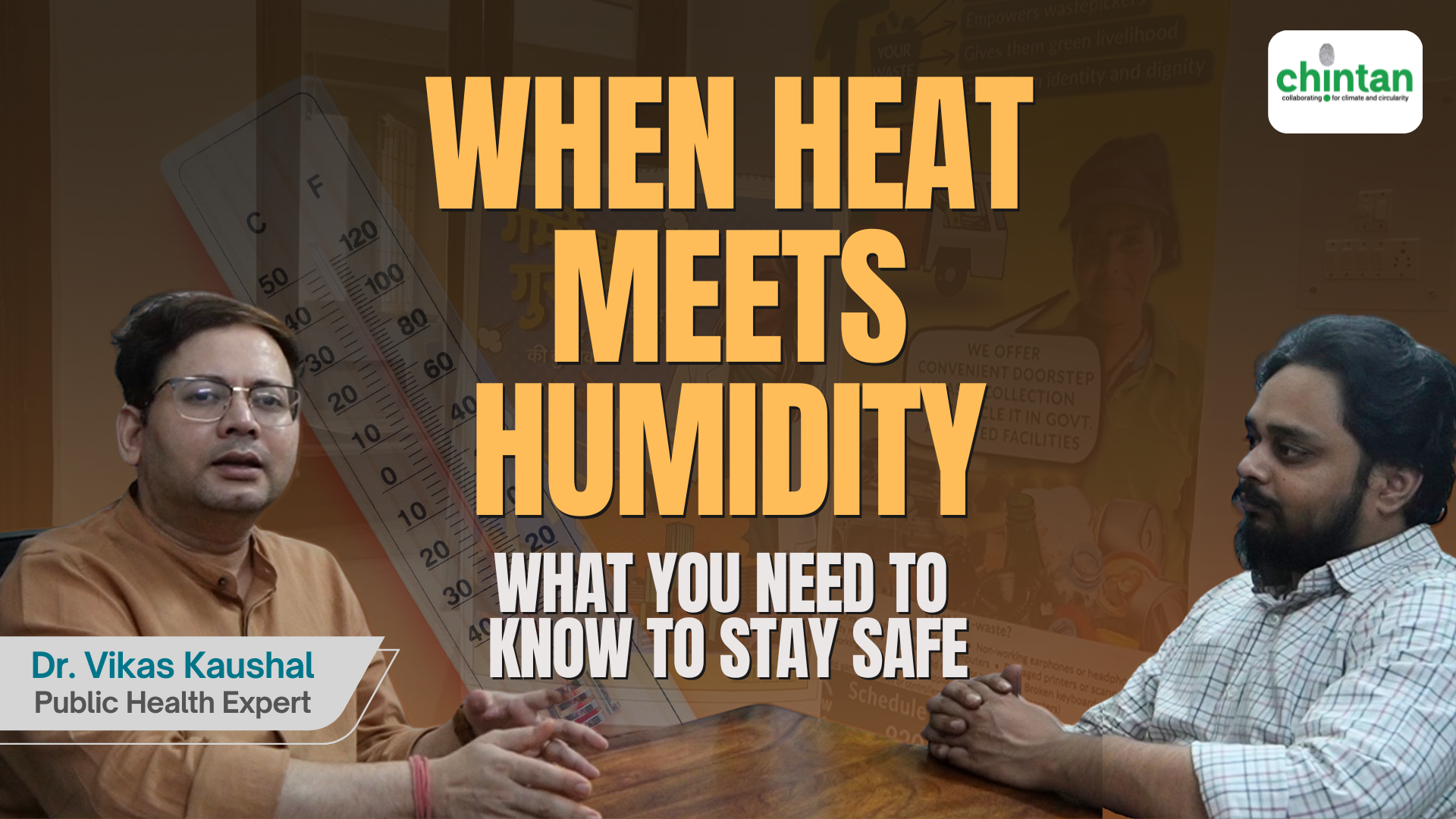
Even outside the peak summer months, spells of high temperature and humidity can put significant stress on the body. When humidity is high, the body becomes less efficient at cooling itself through evaporation, increasing the risk of dehydration and heat-related illness. Dr Vikas Kaushal, a public health expert working with Chintan, explains how heat and humidity affect the body, the warning signs to watch for, when ORS is actually needed, and what people should do when temperatures and humidity rise

Q. How does the body regulate its temperature in hot and humid conditions?

Heat and humidity together affect the body’s ability to regulate its core temperature because evaporation is the primary mechanism through which the body loses heat. When heat and humidity combine, this process becomes less effective, placing greater thermal stress on the body. As a result, the level of heat stress that a person may experience at 40°C in dry conditions can occur at a lower temperature, such as 35°C, when humidity is also high.

Q. What are the early signs that someone may be experiencing heat-related illness?

 A person experiencing heat-related illness may sweat excessively or, in some cases, sweat very little. Other warning signs include mild confusion, irritability, headache, dizziness and fainting. Changes in urine colour can also indicate dehydration. Normally, urine is very light yellow, but with dehydration, it can become dark yellow or even dark orange.

Q. Can urine colour be an indicator of dehydration?

A person experiencing heat-related illness may sweat excessively or, in some cases, sweat very little. Other warning signs include mild confusion, irritability, headache, dizziness and fainting. Changes in urine colour can also indicate dehydration. Normally, urine is very light yellow, but with dehydration, it can become dark yellow or even dark orange.

Q. Should we wait until we feel thirsty before drinking water?

 People often do not drink as much water as they should, and thirst is not necessarily a reliable indicator of how much water the body needs. It is better to drink water at regular intervals. The requirement also varies with temperature. When temperatures are high, the body loses more water through evaporation, so fluid intake may need to increase. When temperatures are lower, the requirement may be somewhat less. An adult can consume up to 5 litres of water over 24 hours.

Q. Can all heat-related illnesses be managed at home?

People often believe that heat-related illnesses can always be managed at home. That is not true. Very mild dehydration, for instance, can be managed at home with ORS and other rehydration solutions. But conditions such as heat stroke and heat syncope require medical attention at the nearest health facility. They cannot be managed at home.

Q. ORS is now widely advertised and is sometimes consumed almost like a regular beverage. What is ORS actually meant for?

It is important to distinguish between rehydration and dehydration. ORS formulated according to FSSAI and WHO guidelines is intended to treat dehydration. Other beverages may help maintain hydration, but they are not the same as ORS.

The ORS commonly used earlier, such as Electral, was available as a powder and was formulated as a dehydration solution according to WHO standards. Dehydration is determined clinically using physiological indicators such as pulse, blood pressure, and urine output. If someone is clinically dehydrated, an approved ORS may be required, and in some cases, intravenous fluids may be necessary.

Q. Is it safe to drink ORS casually, for example, after exercising or at the gym?

No. ORS should not be consumed casually. For example, gym-goers do not need ORS simply as a general rehydration drink. It contains electrolytes, including potassium, and excessive consumption can have adverse effects. ORS should be used when it is actually required to correct or treat dehydration. For routine rehydration, people can have water, shikanji or other appropriate fluids.

Q. What are the risks of consuming ORS unnecessarily or in excess?

Excessive consumption can lead to an increase in blood pressure, hyperkalemia and renal or kidney problems. Therefore, ORS should be used specifically to treat or correct dehydration rather than as a routine beverage.

Q. What are three simple things people can do to protect themselves when temperatures and humidity are high?

First and foremost, keep yourself and your immediate family hydrated. Also, help people in your community stay hydrated.

Second, protect yourself from direct heat. Wear a cap, carry an umbrella and choose loose-fitting clothing, preferably made of cotton or linen.

Q. What are three simple things people can do to protect themselves when temperatures and humidity are high?

First and foremost, keep yourself and your immediate family hydrated. Also, help people in your community stay hydrated.

Second, protect yourself from direct heat. Wear a cap, carry an umbrella and choose loose-fitting clothing, preferably made of cotton or linen.

Third, do not ignore heat-related symptoms. If someone develops symptoms of heat-related illness, they should immediately contact the nearest public or private hospital.

Similar

admin

October 15, 2003

admin

April 16, 2004

admin

September 16, 2004