When Delhi’s summer heat is discussed, the focus usually falls on construction workers, street vendors, traffic police, and delivery riders who are exposed to the afternoon sun. Far less visible are the women who spend much of their day indoors.
In South Delhi’s Dakshinpuri, where closely packed homes can retain heat long after the sun has set, staying indoors offers little relief. For women like Mamta, the heat can make even a room at home difficult to live in
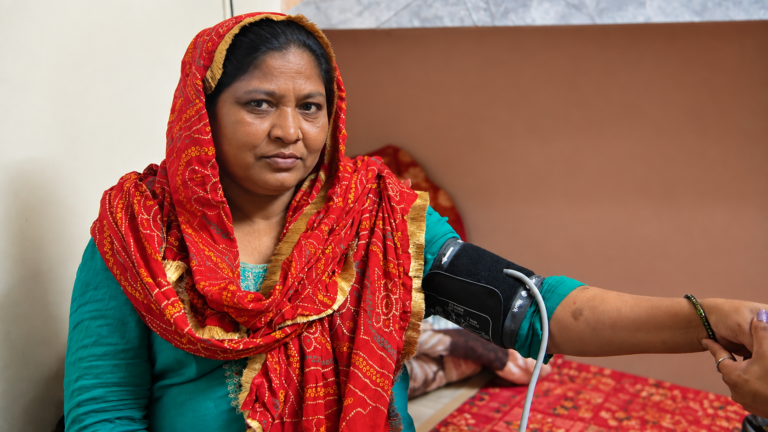
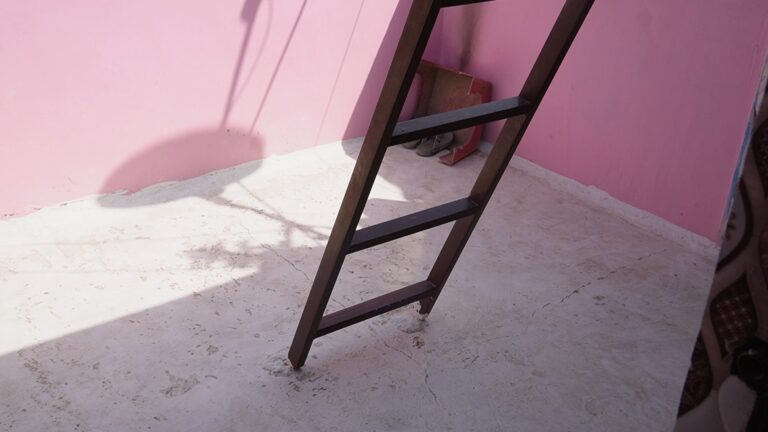
Until recently, Mamta’s upstairs room—a small, makeshift structure the family had built themselves—was too hot to sleep in during Delhi’s summer. At night, the heat trapped beneath the roof made it almost unusable. Now, she sleeps there again.
The change did not come from an air conditioner or a new cooler. The family could not afford air conditioning, while the weak walls of the makeshift room could not accommodate a cooler. Instead, a layer of reflective white paint on the roof made all the difference.
“It was scorching before. Now, after the white paint, I can sleep there at night,” says the 45-year-old Dakshinpuri resident..
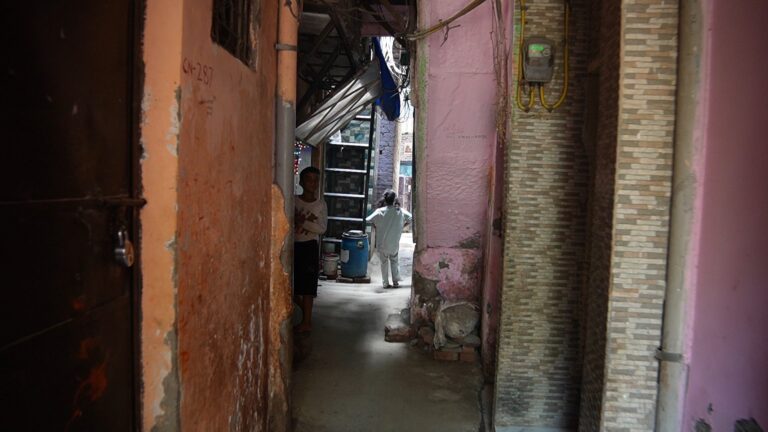
Dakshinpuri is a lower-income neighbourhood, home largely to families dependent on daily-wage work for their livelihoods. Houses are squeezed into narrow lanes where, in some places, a person cannot even stand with both arms outstretched. There is little room for air to move. Open drains carrying wastewater run alongside the lanes, while residents often wash clothes at the entrances of their homes. Trees are a rarity and concrete dominates the landscape.
In many houses, the upper floors are covered with tin sheets that absorb the day’s heat. By evening, there is little breeze and nowhere for that heat to go.
For families without air conditioning, coolers typically serve as the only affordable respite. Yet, when humidity rises, even they can prove ineffective.
For women who dedicate much of their day cooking, cleaning and caring for children, there is rarely an easy way to escape the stifling heat
The home that still holds the heat
A few lanes away, Ankita, 26, is living through a very different summer. Her home has not received the cooling intervention.
The heat has begun to dictate even what she cooks. “I stopped making oily food because they take longer to cook. Standing near the gas stove for so long becomes unbearable,” she says.
She notes that the heat has triggered headaches and bodily aches, leading to frequent sickness during the most intense heat waves. Her daughter, too, is affected by the discomfort.
“The heat caused severe headaches and body pain. I often fell sick. My daughter also suffers because of the heat. She feels very uncomfortable,” Ankita adds.
The family has a cooler, but its efficiency drops when the humidity rises.
“In humid days, the cooler doesn’t provide much relief. It’s not effective,” she notes.
Upstairs, the situation is even worse. Beneath the tin-sheet roof, the room heats up throughout the daytime and remains warm into the night.
Ankita sometimes waits until midnight or even in the night, before the room is cool enough for sleep. Her husband and father-in-law, both returning home exhausted from work, find little comfort waiting for the heat to subside.
- Ankita
Ankita doesn’t work outdoors. Unlike a construction labourer, street vendor, or delivery worker, she isn’t exposed to the afternoon sun. Yet, the home where she spends most of her day provides little refuge from the oppressive heat, either.
When heat follows people indoors
Before her roof was treated, Mamta’s summer was quite similar. “When it was overly hot, I could not cook comfortably. Curries and chapatis take longer to prepare, and meat takes even longer. We opted for lighter meals because they require less time to make,” she recalls
Rest was a challenge, too.
- Mamta
Much of the time was spent in the room with the cooler running. “Apart from the kitchen, we mostly stayed in the room with the cooler,” Mamata says.
The experiences of these two women point to a form of heat exposure that is easy to miss. The sun does not have to be beating down directly for a home to become a source of prolonged heat.
For women whose daily responsibilities keep them indoors, the distinction matters. An overheated kitchen, a poorly ventilated room or a bedroom that remains warm through the night can leave little opportunity to recover from the heat.
“By utilizing shade, reflective surfaces, and improved airflow, indoor temperatures and humidity can be effectively reduced, enhancing comfort and daily functioning. This strategy also alleviates heat-related strain on blood pressure and promotes mental well-being during peak summer and monsoon months. Overall, it presents a practical and cost-effective solution for vulnerable households in urban areas,” explains Dr Vikas Kaushal, a public health expert working with Chintan in Dakshinpuri.
A White Roof, a Room Reclaimed
For Mamta, the change began with the roof. Chintan coated it with reflective white paint as part of its initiattive on affordable cooling solutions. The concept is straightforward: a reflective surface absorbs less solar heat, reducing the amount of heat transferred into the house.
Mamta articulates the outcome more simply. “It was extremely hot before. Now it feels normal. Most significantly, we can utilize the upstairs room again at night.”
The heat has not vanished entirely. Yet, a previously uninhabitable room is now reclaimed for use.
That is the clearest difference between the two homes. In Ankita’s house, the upstairs room remains too hot to use. In Mamta’s case, a relatively simple intervention has made it liveable again.
Making heat adaptation affordable
For many families in neighbourhoods like Dakshinpuri, air conditioning is not an affordable answer. While coolers cost less, their efficiency diminishes when humidity levels rise. When heat and humidity rise together, the body also finds it harder to cool itself through sweating, making hot indoor spaces a source of heat stress.
That makes interventions such as reflective roofs and exhaust systems worth considering—not as substitutes for broader action on extreme heat, but as practical ways to reduce the heat people experience inside their homes.
The impact of these measures extends beyond merely making a room feel cooler. They can enable families to sleep comfortably upstairs again, spend less time avoiding hot kitchens, or even provide a restful space after a long day.
From summer inconvenience to disaster management
The urgency of this issue has escalated as India redefines its approach to extreme heat. In a pivotal move last month, heatwaves and lightning were included in India’s list of officially recognized natural disasters. This change permits states to utilize disaster-response funds to mitigate their effects.
This shift integrates heat more firmly into the nation’s disaster-management strategy. However, addressing a heatwave cannot stop with treating illnesses or delivering aid once temperatures soar to dangerous levels. It also involves reducing exposure before heat inflicts its toll.
A reflective roof won’t single-handedly resolve Delhi’s heat challenge. Nor will an exhaust fan. Yet, within a modest, heat-retaining home, such straightforward interventions can significantly impact how a family lives through summer.
In Dakshinpuri, homes of Ankita and Mamata, located only a few lanes apart offer a glimpse of that difference.
Ashish Srivastava
I help fin-tech digital product teams to create amazing experiences by crafting top-level UI/UX.
Similar
admin
October 15, 2003Composting of Wet Waste
Training waste workers and households in composting to divert wet waste from landfills and abate methane emissions.
admin
April 16, 2004Waste Rules in India
Read More

admin
September 16, 2004The Poison Within – How Environmental Contamination is Impacting Our Children ’s Future
How environmental contamination is impacting our children’s future