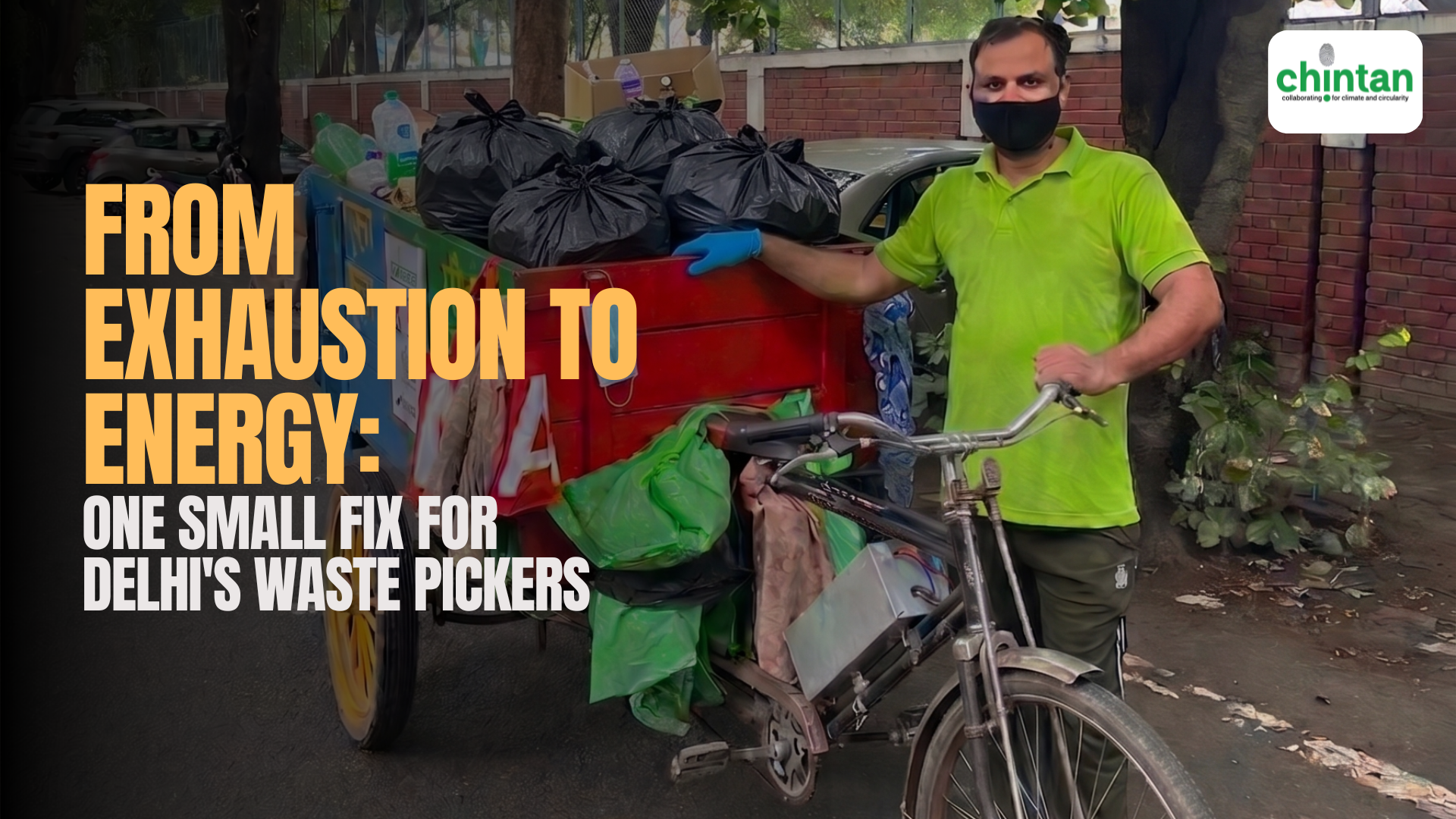
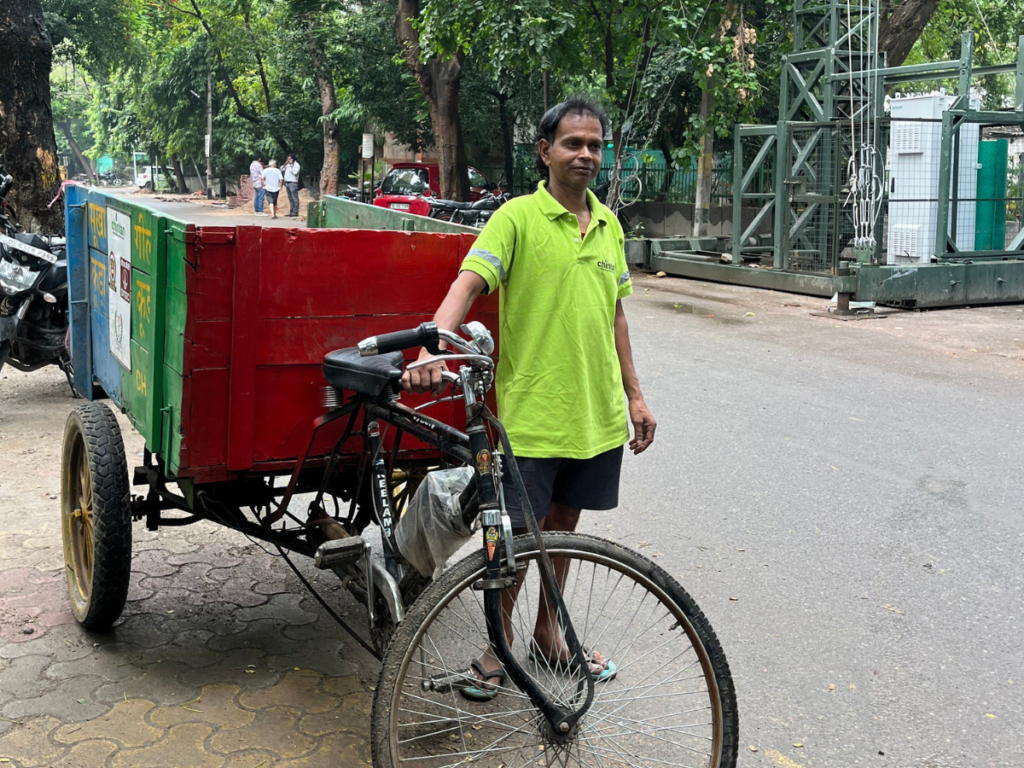
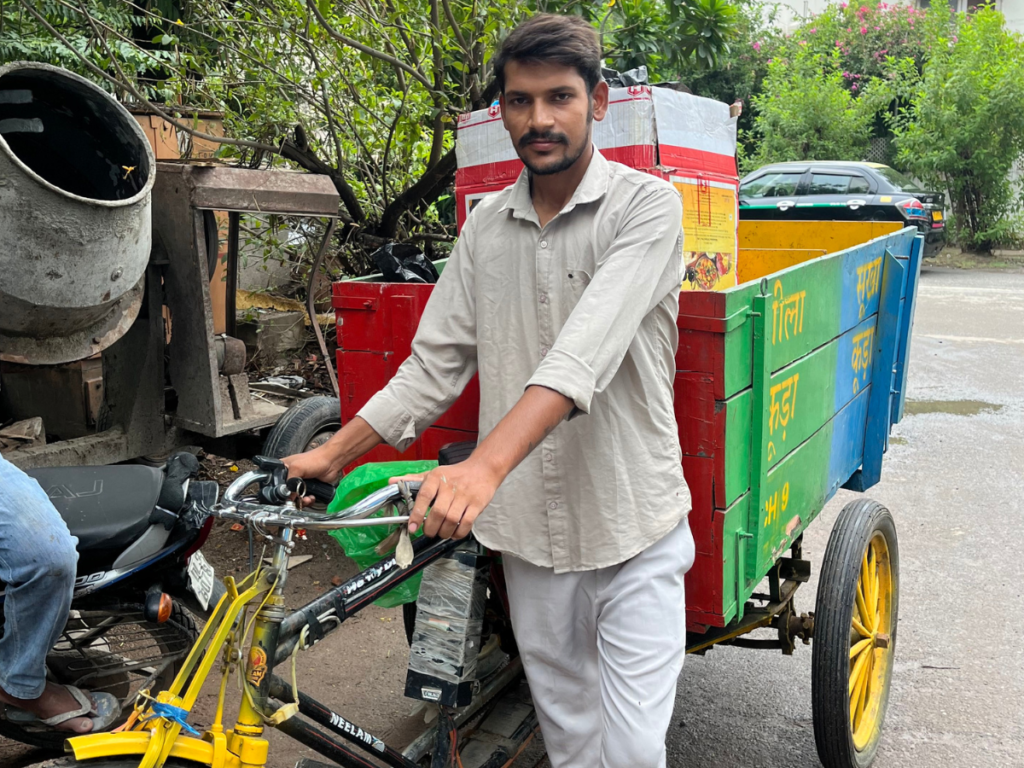
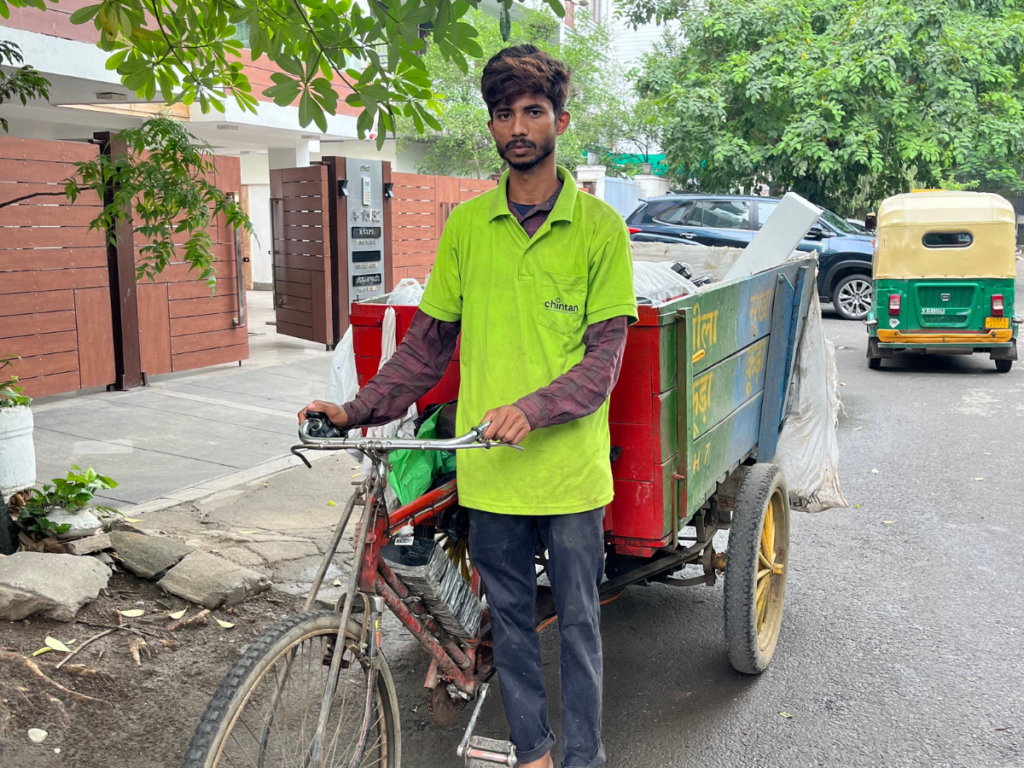
For Delhi’s waste workers, a battery-powered fitting on their manual rickshaws eased the physical strain of pedalling through the summer heat and left some energy for what came after work.
By the time Manish Kumar returned home from work, he had little left for the evening.
His children would ask him to sit with them. But after spending the day collecting waste in Delhi’s heat, he was often too exhausted and dehydrated. All he wanted to do was eat and sleep.
“Earlier, when I returned home after work, all I wanted to do was eat and sleep. My children would ask me to sit with them, but I was too exhausted and often dehydrated after spending the whole day working in the heat,” Manish says.
Pedalling through the hottest hours
Kumar is among 25 waste workers in Delhi who were given battery-powered fittings on their rickshaws by the Chintan Environmental Research and Action Group as part of its climate and health work. The intervention was designed to test whether reducing the physical effort of waste transportation could ease the burden of working in the heat while allowing them to continue working outdoors. The fittings were provided before the peak summer heat so that workers could use the converted rickshaws through the hottest part of the season.
The fitting removed one of the most strenuous parts of their work: continuously pedalling a loaded vehicle along their collection routes.
The rest of the job remained much the same. Workers still went from house to house, collected waste and loaded it into the vehicle. But they no longer had to put in the same physical effort to move the load between households.
Working through heat and humidity
The workers collect waste from more than 100 households a day, beginning their routes at 7 in the morning and finishing as late as 3 in the afternoon.
Their working day stretched through Delhi’s hot and humid summer, under conditions that can become extreme enough for temperatures to exceed 50°C. For workers spending 7-8 hours outdoors, manually pedalling loaded rickshaws through the city, the weather made an already strenuous job even more so.
Before the conversion, pedalling a loaded rickshaw could become particularly difficult as the temperature rose.
“Summer was always the hardest time for us,” says Mithilesh, a door-to-door waste worker in Sujan Singh Park. “Pedalling a loaded rickshaw in the afternoon heat would leave me completely exhausted, and sometimes I had to stop and rest before finishing my work,” he adds.
Then came the battery-powered assistance.
“With the e-rickshaw, the heat is still there, but my work has become much easier. I can complete my route without putting so much strain on my body.”
The change was not only about the effort required to pedal. The slower movement of a manually operated rickshaw could also keep workers on the road longer, sometimes into the hottest part of the afternoon.
Sumit Kumar, who works across several streets in Vasant Vihar, remembers what that meant.
“Earlier, I would still be on the road when the afternoon heat became unbearable because moving a loaded rickshaw took so much time. Now I finish my work much earlier. I spend less time under the hot sun, and when I reach home, I still have the energy to be with my family,” he says.
Less strain, more time
After the intervention, all 25 workers said transporting waste had become much easier. They also recommended extending the intervention to other workers who continue to use manually operated cycle rickshaws.
Nearly all the workers reported reduced fatigue, dehydration and heat-related discomfort after the intervention. Many also reported improved mental well-being, which they associated with reduced work-related stress and more time with their families.
Workers reported being able to move between households more easily and complete their routes earlier. For those living farther from their collection areas, returning home also became quicker and less demanding.
But the battery fitting did not change everything.
Waste collection remained manual. So did loading. Workers continued to spend hours outdoors, and the heat remained part of their working day.
The intervention removed one burden from the equation: the need to pedal a heavy load through that heat continuously.
That is why Mithilesh’s description of the change is perhaps the simplest: “The heat is still there, but my work has become much easier.”
Taking some energy home
The experience also points to what needs to accompany such interventions. Chintan recommends extending the programme to other waste workers who still use manually operated cycle rickshaws, as well as providing drinking water, shaded rest areas, regular health check-ups, and maintenance support for the e-rickshaws.
For Kumar, though, the most important change begins after the route is over. “Since I started using the e-rickshaw, I return home with much more energy. Now I can sit with my family, listen to my children talk about their day and enjoy those moments together. For me, that’s the biggest change the e-rickshaw has brought to my life.”
For workers whose jobs cannot simply move indoors during extreme heat, stopping work is not always an option. Reducing the physical effort required to work outdoors is one way to help protect them from the effects of heat while allowing them to continue earning a livelihood.
The work is still hard. The heat is still there. But there is a little more of Kumar left by the end of the working day.
Ashish Srivastava
I help fin-tech digital product teams to create amazing experiences by crafting top-level UI/UX.
Similar
admin
October 15, 2003Composting of Wet Waste
Training waste workers and households in composting to divert wet waste from landfills and abate methane emissions.
admin
April 16, 2004Waste Rules in India
Read More

admin
September 16, 2004The Poison Within – How Environmental Contamination is Impacting Our Children ’s Future
How environmental contamination is impacting our children’s future