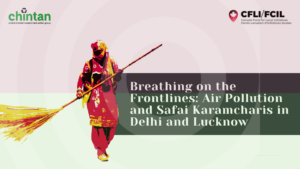
Delhi and Lucknow, two of North India’s largest and most influential urban centres, are grappling with a deepening air quality emergency. Despite years of policy attention and public concern, both cities continue to struggle with dangerously high levels of air pollution that threaten public health and quality of life.
Recognising the severity of the problem, Delhi and Lucknow are officially classified as “non-attainment cities” under India’s National Clean Air Programme (NCAP). This designation applies to cities that have consistently failed to meet the National Ambient Air Quality Standards (NAAQS).
Delhi: A Persistent Pollution Hotspot
In Delhi, air pollution is the result of multiple, overlapping sources. Vehicular emissions, industrial activity, construction dust, and the widespread burning of biomass and waste all contribute to persistently high pollution levels. These sources are further aggravated during the winter months, when calm winds and temperature inversions trap pollutants close to the ground.
Recent data continue to show that Delhi’s annual average PM10 concentrations remain far above national limits, with frequent episodes of “very poor” to “hazardous” air quality. For millions of residents, breathing clean air remains a seasonal luxury rather than a daily reality.
Lucknow: Struggling Amid Rapid Urban Growth
Lucknow, located in the Indo-Gangetic Plains, faces many of the same challenges. Rapid population growth, increasing traffic, expanding construction activity, and pollution transported from surrounding regions all contribute to deteriorating air quality.
These challenges were reflected in the 2025 Swachh Vayu Sarvekshan, a national survey assessing air quality management efforts across cities. Lucknow slipped in its rankings, underscoring persistent gaps in implementation and enforcement, even as the city continues to experience repeated episodes of unhealthy air quality.[1]
A Regional Public Health Emergency
Across much of North India, including both Delhi and Lucknow, the annual average PM2.5 concentrations routinely exceed India’s national standard of 40 µg/m³, often by two to three times. These levels are also far higher than the World Health Organization’s guideline of just 5 µg/m³, highlighting the scale of the public health crisis.[2]
The impacts of this pollution are not evenly distributed. Low-income communities and occupational groups that spend long hours outdoors bear a disproportionate burden of exposure.
The Invisible Risk to Safai Karamcharis
Among the most vulnerable are Safai Karamcharis, waste and sanitation workers who keep cities functioning but are routinely exposed to high pollution levels as part of their daily work. While their labour is essential in managing dust, waste, and urban cleanliness, they are among those vulnerable communities, which are forced to breathe polluted air.
With prolonged outdoor exposure and limited access to protective equipment, these workers face heightened risks of respiratory and cardiovascular illnesses. Their exposure is not accidental, but shaped by structural inequalities, occupational invisibility, and exclusion from air quality decision-making.
Recognising this urgent need, Chintan with support from the Canada Fund for Local Initiatives (CFLI), organised capacity-building trainings in Delhi and Lucknow under the banner “साफ़ शहर, साफ़ साँस” (Clean City, Clean Breath). In partnership with the New Delhi Municipal Council (NDMC), over 70 Safai Karamcharis were trained in Delhi, while almost 115 Safai Karamcharis participated in similar training in Lucknow.
Building Awareness, Reducing Exposure
These sessions focused on reducing air pollution exposure among vulnerable groups. Participants were guided on identifying key health risks associated with high PM2.5 and PM10 exposure, understanding pollution patterns, and adopting simple, practical measures to reduce daily exposure. The trainings also created space to centre the lived experiences of workers who help manage dust and waste for the city, yet remain largely invisible in policies meant to protect urban air and health.
The trainings also marked the inauguration of “साफ शहर, साफ साँस”, an easy- guide designed specifically for Safai Karamcharis. The guide aims to empower these workers with accessible information and practical steps to protect their health while performing essential public services.
Breathing Toward a Cleaner Future
Delhi and Lucknow’s air pollution crisis is a reminder that clean air is not just an environmental issue, it is a question of public health, equity, and dignity. Any response to air pollution must include those who are most exposed, especially workers whose labour keeps cities clean but whose health is rarely prioritised. While long-term solutions require stronger policy implementation, coordinated governance, and sustained political will, immediate steps to protect the most exposed workers are equally critical.
[1]Lucknow falls 11 places in annual nat’l clean air survey | Lucknow News – The Times of India
[2] Explainer: Polluted air isn’t a Delhi problem only

admin
I help fin-tech digital product teams to create amazing experiences by crafting top-level UI/UX.
Related Posts


Composting of Wet Waste
Training waste workers and households in composting to divert wet waste from landfills and abate methane emissions.
Waste Rules in India
Read More
The Poison Within – How Environmental Contamination is Impacting Our Children ’s Future
How environmental contamination is impacting our children’s future