Understanding climate awareness and resilience needs among children in Delhi NCR’s landfill communities.

What do children on the frontlines of pollution understand about climate change?

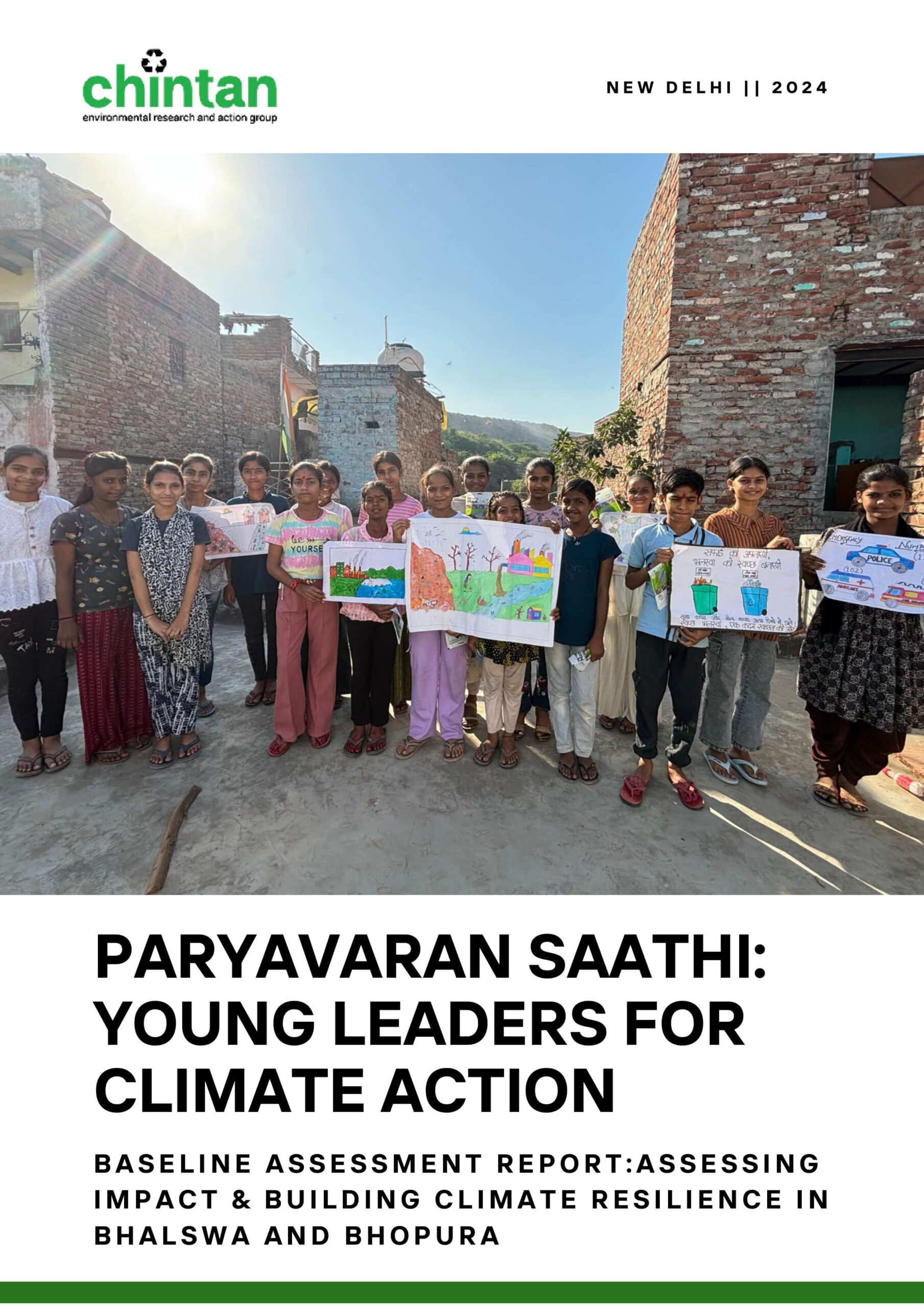
Chintan’s Paryavaran Saathi – Baseline Assessment captures the starting point of climate knowledge, attitudes, and practices among 457 students aged 10–18 in Bhalswa and Bhopura — two landfill-adjacent communities in Delhi NCR. Conducted ahead of a year-long climate education programme, the report sheds light on how young people from waste picker families perceive the climate crisis and what support they need to take action.

Despite living amidst rising temperatures, air pollution, and extreme weather events, a majority of surveyed children had little to no understanding of climate change and its impacts. Only 8.9% could explain what climate change is, and 78% were unaware of its causes.

Key findings include:

  • Low climate literacy: 58% of students had never heard the term “climate change”; over 80% couldn’t link it to local community impacts.

  • Limited disaster preparedness: 70% of households lacked an emergency kit; over 82% of children didn’t know about disaster types.

  • Desire to learn vs. lack of agency: 96% wanted to be informed about climate change, yet 47% believed they were “too young” to act.

  • High climate exposure: Over half observed worsening air pollution, heatwaves, and waste burning — but could not interpret these as climate signals.

The assessment also reveals stark gaps in gendered understanding of impacts, emotional distress linked to climate anxiety, and limited access to reliable information sources.

The baseline report makes a compelling case for context-specific, experiential climate education that builds awareness, agency, and resilience among youth in vulnerable communities — laying the foundation for Paryavaran Saathi: Young Leaders for Climate Action to create informed, empowered climate champions.

Similar

admin

October 15, 2003

admin

April 16, 2004

admin

September 16, 2004