A blueprint for climate change education and youth leadership among children in Delhi NCR’s waste picker communities.

How do we build climate leaders where the climate crisis hits hardest?

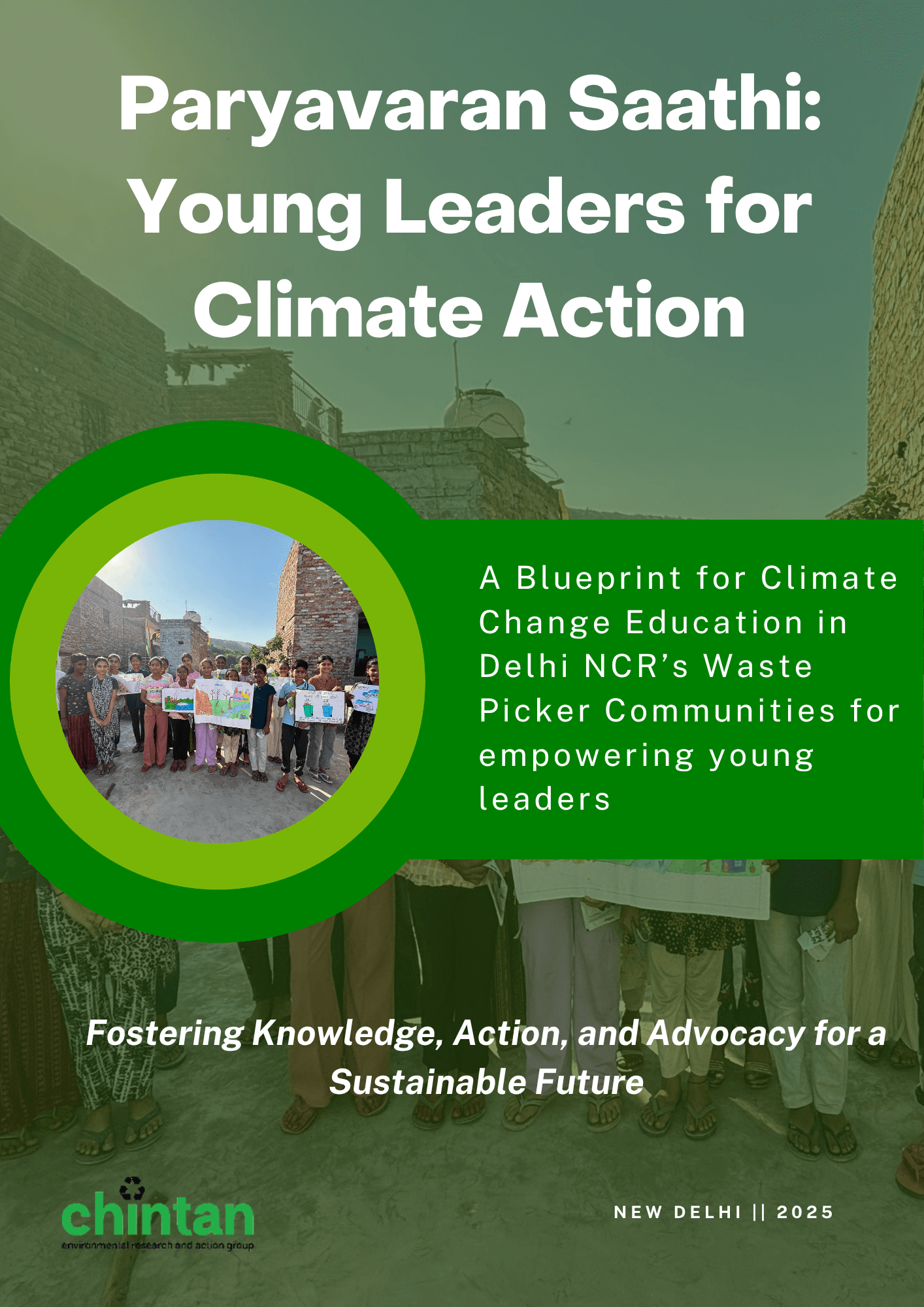
Chintan’s new report, Paryavaran Saathi: Young Leaders for Climate Action, documents a 41-week climate education initiative designed for children growing up in landfill-adjacent settlements in Delhi NCR. Through a unique blend of awareness, action, and advocacy, the program empowers young people from waste picker communities to understand climate change, take community-based action, and raise their voices on environmental justice.

The report demonstrates how vulnerable children—often excluded from mainstream climate conversations—can become powerful changemakers when provided context-specific education and leadership pathways.

Using a three-pillar approach, the program moved from knowledge-building to hands-on projects and public advocacy:

  • Under Awareness, children learned climate science through games, storytelling, experiments, and observation-based learning, connecting global climate issues to local realities like landfill fires, heatwaves, and toxic air.
  • The Action phase translated learning into impact: 18 student groups implemented projects such as waste-to-wealth upcycling, composting, street plays, climate storytelling, and door-to-door awareness campaigns—proving that even small actions can transform behaviours at home and across neighbourhoods.
  • In Advocacy, students gained skills in public speaking and policy engagement, participating in Youth Parliaments, Climate Panchayats, and national climate platforms—including LCOY and COP28-linked youth forums.

Baseline and endline assessments reveal striking shifts: climate awareness increased from 8.9% to 56.9%; waste segregation at home from 21% to 76%; and confidence to take climate action rose sharply as children saw themselves as environmental leaders—not just passive victims of pollution.

Paryavaran Saathi presents a scalable model for inclusive, community-based climate education—placing children from waste picker communities at the forefront of climate resilience, advocacy, and local action.

Similar

admin

October 15, 2003

admin

April 16, 2004

admin

September 16, 2004