admin
I help fin-tech digital product teams to create amazing experiences by crafting top-level UI/UX.
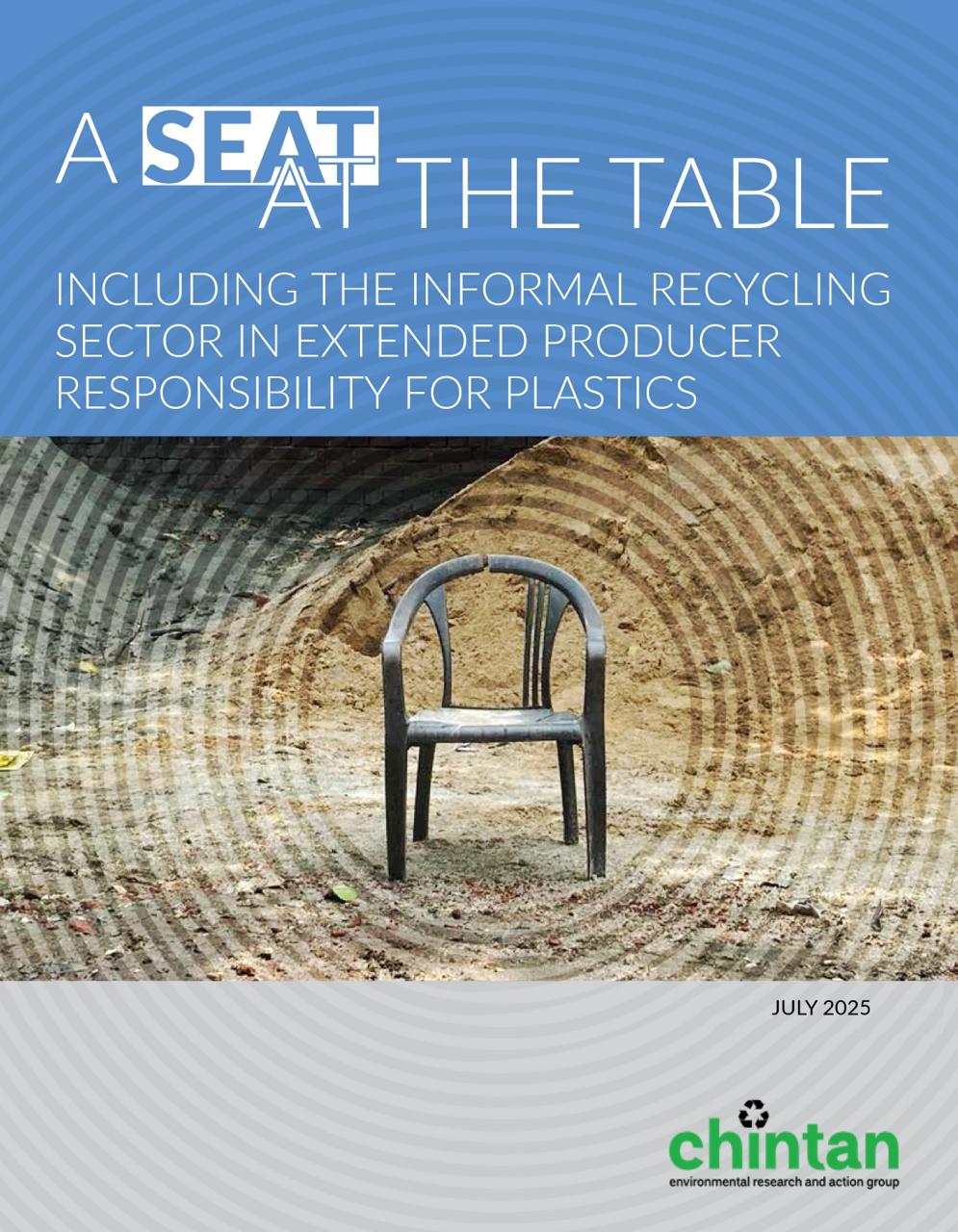
Chintan Environmental Research and Action Group’s latest report, A Seat at the Table, explores the vital role of India’s informal recycling sector—particularly wastepickers—in enabling Extended Producer Responsibility (EPR) for plastics. Despite collecting and processing a majority of the country’s plastic waste, informal workers remain largely excluded from EPR frameworks.
Launched at a high-level panel discussion, the report makes a compelling case for rethinking the plastic value chain to centre equity, ethical sourcing, and inclusion.
The report argues that India’s EPR system cannot succeed without recognizing and fairly compensating the 15-lakh strong informal workforce that collects, sorts, and aggregates plastic waste. Currently, these workers remain invisible in compliance structures and reporting requirements. This exclusion not only weakens implementation but deepens environmental injustice.
A Seat at the Table draws from field data, policy analysis, and national and global case studies to:
Launched just ahead of the UN INC negotiations on the Global Plastics Treaty, the report offers a timely intervention into global conversations on plastics and environmental equity.
I help fin-tech digital product teams to create amazing experiences by crafting top-level UI/UX.
Training waste workers and households in composting to divert wet waste from landfills and abate methane emissions.
Read More
How environmental contamination is impacting our children’s future

Support our initiatives so that we can reach more and more people and provide our support to the needy
Click on the blue round button at the bottom right corner of this page. You can also email our support team at support@example.com
Chintan, meaning thought/reflection in Hindi, is an environmental research and action group.
Subscribe to get the latest news form us
© 2025 Chintan Environmental Research & Action Group